


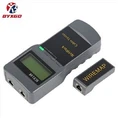


FTTH Drop Cable
What is FTTH Drop Cable
The FTTH drop cable is typically made of a thin, flexible fiber optic material that can be easily installed in a variety of ways, such as through a conduit or by being blown through a tube. It is usually connected to a fiber optic network using a specialized connector, and is designed to be securely fastened to the outside of a building to prevent damage or disruption to the signal.
Benefits of FTTH Drop Cable
High-Speed Connectivity
FTTH drop cables allow for the delivery of ultra-fast internet speeds, enabling seamless streaming, online gaming, and data-intensive applications. The use of fiber optics ensures minimal data loss and high bandwidth capabilities.
Improved Signal Quality
Fiber optic technology provides superior signal quality, minimizing signal degradation over long distances and ensuring a reliable and consistent internet connection. FTTH drop cables offer low latency and high signal-to-noise ratios, resulting in excellent data transmission performance.
Scalability
FTTH drop cables are designed to accommodate future network expansion and upgrades, allowing service providers to easily increase bandwidth and meet growing customer demands. The scalability of FTTH networks ensures that they can keep up with evolving technology and provide reliable high-speed connections for years to come.
Enhanced Reliability
Unlike traditional copper cables, FTTH drop cables are less susceptible to electromagnetic interference, providing a stable and uninterrupted internet connection. The use of fiber optics eliminates issues such as crosstalk and radio frequency interference, leading to a more reliable network with minimal service disruptions.
Increased Flexibility
With various types of FTTH drop cables available, service providers can choose the most suitable option for different installation scenarios, whether indoor or outdoor. This flexibility allows for efficient and cost-effective deployment of fiber optic networks in various geographical areas.


Why Choose Us
Competitive prices
We offer our products at competitive prices, making them affordable for our customers. We believe that high-quality products should not come at a premium, and we strive to make our products accessible to all.
High quality products
We always put customer needs and expectations in the first place, refine on, continuous improvement, to seek every opportunity to do better, to provide customers with their expectations of quality products, to provide customers with the most satisfactory service at anytime.
Customer satisfaction
Providing after-sales services can enhance customer satisfaction by ensuring that customers' needs are met even after the purchase. This can lead to increased customer loyalty and positive word-of-mouth referrals.
Rich experience
Has a long-standing reputation in the industry, which makes it stand out from its competitors. With over many years of experience, they have developed the skills necessary to meet their clients' needs.
Efficient and convenient
The company has established marketing networks around the world to provide high-quality services to customers in an efficient and convenient manner.
Quality assurance
In terms of quality assurance, the company strictly follows the standards and norms of the industry quality system. Adopt industry-leading testing equipment to ensure product quality and good reputation.
Different Types of FTTH Drop Cable
The 2-core FTTH drop cable is a common choice, and its core feature is its high flexibility and convenience. This cable is suitable for small to medium-sized network deployments and performs especially well in home or small business scenarios. Its relatively simple design makes it easier to install and maintain, making it an affordable option.
The 4-core drop cable is even more impressive in terms of flexibility and scalability of network connections. This type of cable is suitable for use in environments where multiple devices need to be connected or where the network topology is complex. It is designed with larger network deployments in mind, providing users with greater connectivity options to meet growing digital demands.
When selecting different types of FTTH drop cables, the size of the network, its topology and future expansion plans need to be taken into account. 2-core fiber drop cable is suitable for relatively simple cabling, while 4-core drop cable is more suited to large-scale, multi-device-connected network environments.
There are other types of FTTH drop cables, such as multimode fiber-compatible designs or ftth outdoor drop cable and ftth indoor drop cable with special environmental adaptations. understanding the characteristics of these different types will help users better select the appropriate drop cable for their network needs.
FTTH Drop Cable Emerges as a Key Technology for Smart Cities
As smart cities continue to evolve, the need for faster and more reliable internet connectivity becomes increasingly important. The emergence of FTTH (Fiber to the Home) drop cable technology is poised to play a critical role in meeting this demand.
FTTH drop cables are designed to connect fiber optic networks to individual homes and businesses. These cables use advanced fiber optic technology to deliver high-speed internet access directly to the end user, enabling faster data transmission and more reliable connectivity than traditional copper cables.
One of the key benefits of FTTH drop cables is their ability to support multiple applications, such as high-definition video streaming, video conferencing, online gaming, and cloud computing. This makes them an ideal solution for smart city applications, which require high-speed and reliable internet connectivity to support various services, such as traffic management, public safety, and environmental monitoring.
FTTH drop cables offer several other advantages over traditional copper cables. They are more durable, resistant to interference and signal degradation, and require less maintenance. They also have a longer lifespan and can support higher bandwidth, making them a cost-effective investment for smart city infrastructure.
As smart cities continue to grow and develop, the demand for FTTH drop cables is expected to increase. Governments and private sector organizations around the world are investing in this technology to build the necessary infrastructure for smart city applications.
FTTH drop cables represent a key technology for smart cities, providing fast and reliable internet connectivity that is essential for supporting the wide range of services and applications that are critical for the development of modern cities.
Factors to Consider When Selecting FTTH Drop Cables

Installation Environment
The installation environment helps select FTTH drop cables. In outdoor settings, cables must have UV protection and tolerate temperature fluctuations and moisture. For example, cables with a loose tube design are superior in areas with temperature variations; they offer better thermal performance. Conversely, in indoor scenarios, flexibility and flame retardancy are priority attributes. Here, tight-buffered cables are ideal since they are easier to install in confined spaces and safer in case of fire.

Application and Use
The application and use of the FTTH drop cable influence the selection. Cables with higher fiber counts and greater bandwidth abilities are good for high-bandwidth applications, including commercial buildings or data centers. An example is using multi-fiber cables to handle increased data transmission demands. Further, for areas with frequent reconfiguration or upgrades, cables with easy-access features, like ribbon cables that allow quick splicing, are helpful. Also, consider the mechanical stresses the cable might endure in areas with high foot traffic or rodent damage.

Future Plans
Anticipating future needs is key to picking the suitable FTTH drop cable. Cables with extra capacity or upgradeable features are wise for areas undergoing growth in data demand. For example, a cable with spare fibers can house future bandwidth needs without extra cable installation. Plus, cables with the latest fiber technology, like bend-insensitive fibers, confirm compatibility with surfacing network equipment and technologies. It provides future-proofing for the network setup.
The basic construction of an FTTH drop cable includes aspects such as the number of fibers, the core structure, and the outer material. Generally speaking, such cables usually contain 1 to 4 cores of optical fiber, and the selection of these cores will depend on the network needs and transmission requirements. In terms of core structure, the cable is designed to focus on the protection and transmission quality of the optical fibers to ensure that losses are minimized during signal transmission.
Fiber optic FTTH cables typically consist of multiple layers of materials that provide protection and stability in different environments. The selection of the outer material takes into account the flexibility, durability and interference resistance of the cable to accommodate different installation scenarios, including indoor and outdoor environments.
The essential characteristics of FTTH drop cable also include their support for high-speed data transmission. High-quality FTTH roll-in cables should be able to meet the demands of modern networks for fast data transmission and high bandwidth, ensuring that users get the best possible performance for HD video viewing, online gaming, or large file transfers.
In addition to these basic features, innovative designs such as anti-aging, water and moisture resistance can further enhance the reliability and stability of FTTH drop cable to perform well in a variety of extreme environments.
FTTH Drop Cable Termination Method: Splice or Connector
It’ s necessary to choose a right fiber optic cable for FTTH network from overall. However, FTTH drop cable as the final connection from the fiber optic network to customer premises also plays an important role. Thus, finding a flexible, efficient and economical FTTH drop cable termination method becomes a crucial part of broadband service. As mentioned in the beginning, there are two FTTH drop cable termination methods: splice and connector. Simply speaking, splice refers to permanent joint by splicer, while connector method can be easily mated and un-mated by hand.
Splice vs Connector
Which eliminates the possibility of the interconnection point becoming damaged or dirty with a permanent joint, has better optical performance than fiber optic connector.
Splice lacks of operational flexibility compared with fiber optic connector. Fiber optic connector can provide an access point for networking testing which cannot be provided by splicing. Both methods have their own pros and cons.
Generally, splice is recommended for FTTH drop cables in the places where no future fiber rearrangement is necessary, like a greenfield, new construction application where the service provider can easily install all of the drop cables. Fiber optic connector is appropriate for applications which flexibility is required, like ONTs which have a connector interface.
Choosing the Right Splice Method
For FTTH drop cable splice, there are two methods. One is fusion splicing, and the other is mechanical splicing. Fusion splice has been proved to provide a high quality splice with low insertion loss and reflection. However, the initial capital expenditures, maintenance costs and slow installation speed of fusion splicing hinder its status as the preferred solution in many cases. Mechanical splicing is widely used in FTTH drop cable installation in countries, as a mechanical splice can be finished in the field by hand using simple hand tools and cheap mechanical splicer (shown in the following picture) within 2 minutes.
Choosing the Right Connector
For fiber optic connector, there are two types of connectors for FTTH drop cable connection. Field terminated connector, which contains fuse-on connector and mechanical connector, and pre-terminated drop cable, which is factory terminated with connector on the end of drop cable.
Fuse-on connector uses the same technology as fusion splicing to provide the high optical connection performance. However, it requires expensive equipment and highly trained technician, and more time like fusion splicing. Mechanical connector could be a replacement of fuse-on connector (shown in the following picture), if the conditions do not fit the mentioned ones. It could be a time-save and cost-save solution for drop cable termination.
Choosing the Right Connector
For fiber optic connector, there are two types of connectors for FTTH drop cable connection. Field terminated connector, which contains fuse-on connector and mechanical connector, and pre-terminated drop cable, which is factory terminated with connector on the end of drop cable.
If you have no limits in cost and want high performance termination in a time-save way, pre-terminated drop cable could be your choice. Many factories can provide you customized drop cables in various fiber types, fiber optic connector and lengths.
FTTH Drop Cable Construction and Components
FTTH drop cables are typically constructed with a central optical fiber surrounded by protective layers to ensure durability and signal integrity. The key components of an FTTH drop cable include:
Optical Fiber
The core component of the cable, the optical fiber, is responsible for transmitting data using light signals. It consists of a glass or plastic core surrounded by a cladding layer, which helps maintain the light signals within the core.
Strength Members
These components provide tensile strength and protect the cable from external stresses. Common strength members used in FTTH drop cables include aramid yarn (such as Kevlar) or fiberglass. They enhance the cable's durability and resistance to stretching or breaking during installation.
Jacket
The outer layer of the cable, known as the jacket, provides mechanical protection and safeguards against environmental factors such as moisture, UV radiation, and temperature fluctuations. The jacket material is usually made of high-quality PVC or LSZH (Low Smoke Zero Halog.
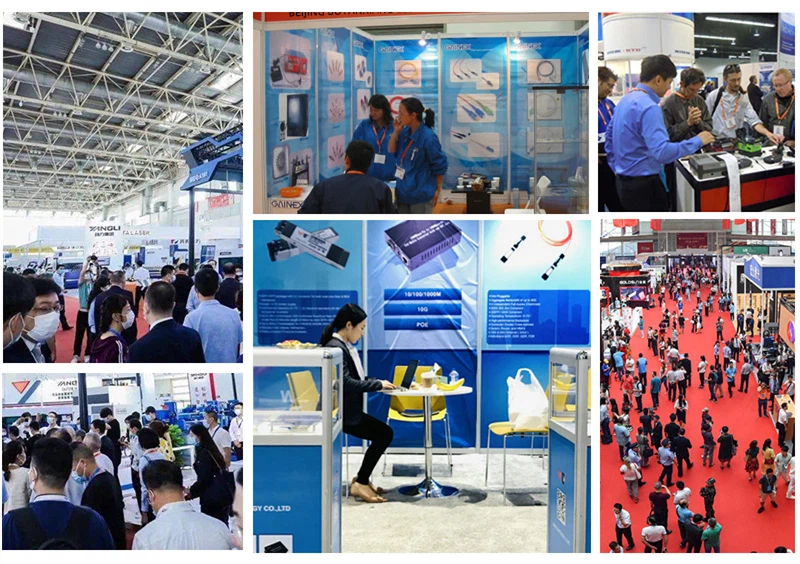
Our Factory
Babaolu (Shenzhen) International Technology Co., Ltd. founded in September 24, 2009 in Haidian District, Beijing, is a franchise fiber network products enterprise, products are optical fiber tools and accessories (optical power meter, red light pen, fiber jumper, tail fiber, optical power red light integrated machine cold connector, transceiver, Optical time domain reflectometer (OTDR), optical fiber found disabled apparatus, network tester, fast connection, cold pick up tools, etc.) product development and sales business.

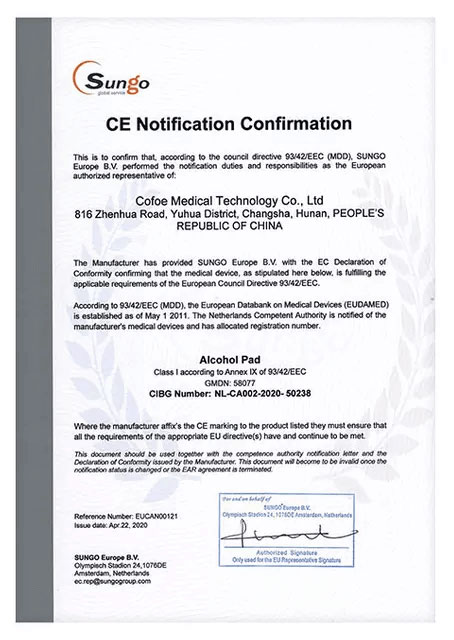
Certifications

FAQ
As one of the most professional ftth drop cable manufacturers and suppliers in China, we're featured by quality products and good service. Please rest assured to buy ftth drop cable at competitive price from our factory.
singlemode fiber with multimode sfp, lc to lc coupler multimode, Single Mode v Multimode Fiber