


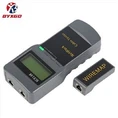


10/100/1000M Fiber Media Converter
What is 10/100/1000M Fiber Media Converter
10/100/1000M media converter transforms the transmission media of Ethernet signal from twisted pair to optical fiber. It can extend the transmission distance from 550m to hundred kilometers.
Benefits of 10/100/1000M Fiber Media Converter
Increased speed
Fiber media converters let you and all of your network’s users get tasks done in the fastest amount of tie possible. Fiber-based media converters are versatile and maximize functionality at an affordable cost.
A bigger network
Fiber media converters also allow your network to expand past its current capabilities. Since media converters are basically two different transceivers passing data back and forth, they can increase the quality and power of your access and support a fast and rigorous network speed.
Cost-effective
Fiber media converters are incredibly cost effective. Fiber networks can sustain high bandwidth features including video streaming. Since the media converter will marry your fiber and copper networks without needing to install a great deal of new infrastructure, your entire network will benefit without breaking the bank.
Less electromagnetic interference
Fiber media converters make the path between copper to fiber much gentler, with the added benefit of less electromagnetic interference. They can also help to stand in for people who want to make the entire switch to fiber but don’t have the funds to do so yet.


Why Choose Us
Competitive prices
We offer our products at competitive prices, making them affordable for our customers. We believe that high-quality products should not come at a premium, and we strive to make our products accessible to all.
High quality products
We always put customer needs and expectations in the first place, refine on, continuous improvement, to seek every opportunity to do better, to provide customers with their expectations of quality products, to provide customers with the most satisfactory service at anytime.
Customer satisfaction
Providing after-sales services can enhance customer satisfaction by ensuring that customers' needs are met even after the purchase. This can lead to increased customer loyalty and positive word-of-mouth referrals.
Rich experience
Has a long-standing reputation in the industry, which makes it stand out from its competitors. With over many years of experience, they have developed the skills necessary to meet their clients' needs.
Efficient and convenient
The company has established marketing networks around the world to provide high-quality services to customers in an efficient and convenient manner.
Quality assurance
In terms of quality assurance, the company strictly follows the standards and norms of the industry quality system. Adopt industry-leading testing equipment to ensure product quality and good reputation.
Classification of Fiber Media Converters
According to the rate, it can be divided into separate 10M, 100M, 1000M rate; 10/100M adaptive; 10/100/1000M adaptive; 10000M rate, etc.
According to the nature of fiber, it can be divided into multi-mode fiber media converter and single-mode fiber media converter. Multi-mode fiber media converter generally have a transmission distance between 300m and 2 kilometers; single-mode fiber media converters are suitable for long-distance transmission, 10km to 120km.
According to the number of optical fibers, it can be divided into dual-fiber fiber media converters and single-fiber fiber media converters. The data transmission and reception of dual-fiber media converters each need one optical fiber, and the single-fiber media converter can be on one optical fiber. Realize data reception and transmission.
According to the structure type, it can be divided into independent type, rack type and card type.
According to management type, divided into managed fiber media converters and unmanaged fiber media converters. Unmanaged fiber media converters are plug-and-play, easy to install and troubleshoot for novices, and can allow network equipment Communicate automatically in the network; the managed fiber media converters supports telecommunication-level network management, and can achieve effective control and maintenance in the fully managed backbone network and edge network. Compared with the unmanaged type, it can provide additional network monitoring functions, fault detection and remote configuration functions.
According to the working mode, divided into full-duplex and half-duplex, the full-duplex mode means that two different transmission lines send and receive data respectively, and both parties in the communication can send and receive operations in the same trial; The half-duplex mode refers to the use of the same transmission line for both receiving and sending. Although data can be transmitted in both directions, the two communicating parties cannot send and receive data at the same time.
According to the function, it can be divided into commercial-grade and industrial-grade fiber media converters. Commercial-grade fiber media converters are suitable for environments where the operating temperature is -10℃ to 55℃, such as enterprise networks, campus networks and data centers. Industrial-grade fiber media converters are suitable for harsh industrial environments, with operating temperatures ranging from -40°C to 85°C, with lightning and surge protection and IP40 dust-proof power supply, even in more dangerous areas, such as oil exploration, natural gas drilling, Mining, etc., can also ensure the stability of network transmission.
How to Choose Fiber Media Converters
There are many types of fiber media converters, and different types of fiber media converters have corresponding functions. When we buy, we should pay attention to whether the fiber media converters we buy can meet our needs. Here are the following principles for purchasing. Points to note:
See if full-duplex and half-duplex are supported: If only full-duplex is supported, but half-duplex is not supported, and it is connected to a switch or hub of another brand using half-duplex mode, serious collision and loss will be caused. package.
Is it compatible: See if the product meets the IEEE802.3 standard. If it does not meet this standard, there will be compatibility issues. fiber media converters are generally used in pairs except for the pairing of fiber media converters and SFP, so When purchasing, pay attention to whether the two fiber media converters are compatible.
High temperature working capability: The fiber media converter is a device that needs long-term operation. It will generate high heat during use. Pay attention to whether the fiber media converters can operate normally at high temperatures and what is the maximum allowable operating temperature.
Product appearance: look at whether the product has abrasion and traces of use. The use of second-hand optical fiber products is prone to contamination of the optical path, reducing service life, and reducing transmission quality.
Is there a safety device to prevent packet loss: Check whether the fiber media converters uses a buffer circuit design. The buffer circuit can effectively and safely avoid data packet loss. Although the register data transmission mode is low in cost, it can lead to unstable data transmission and risk of packet loss.
How Does a Fiber Optic Media Converter Work

Media converters work on the physical layer of the network. They receive data signals from one media and convert them to another while remaining invisible to data traffic and other net devices. They do not interfere with upper-level protocol information. This lets them support quality of service and Layer 3 switching.
Media converters change the format of an Ethernet-based signal on Cat-5 into a format compatible with fiber optics. At the other end of the fiber cable run, a second media converter is used to change the data back to its original format. One important difference to note between Cat-5 and fiber is that Cat-5 cables and RJ45 jacks are bidirectional while fiber is not. Thus, every fiber run in a system must include two fiber cables, one carrying data in each direction. These are typically labeled transmit (or Tx) and receive (or Rx).
Media Converters can function in either half-duplex or full duplex mode. Full duplex Ethernet over UTP runs at 20 or 200Mbps, while half-duplex Ethernet over UTP runs at either 10 or 100 Mbps. Full duplex Ethernet is especially valuable in linking two switches or connecting a switch to a file server. No adjustments are necessary when using either mode. A Fiber Optic Media Converter will automatically sense which mode is in operation.
There are several types of fiber optic media converters available, such as Ethernet Media Converter, 10/100/1000 Media Converters, Gigabit Ethernet Converter, Mulitmode Singlemode Media Converter, 10 Gigabit Ethernet Converter, Media Converter Rack Chassis, etc.

Troubleshooting Fiber Optic Media Converter In Your Network
Media converters for fiber optic cable are designed to be easy to use, but if you encounter issues with their performance, you'll need to troubleshoot. Here are some common problems and their solutions:
If the POWER LED is off and the media converter isn't receiving power, make sure the power cord is securely connected, check that the power outlet is functioning, try a different power adapter, and verify the voltage levels.
If network performance between the twisted-pair port and an end node is slow, there may be a duplex mode mismatch. Adjust the duplex mode so both ports are using the same mode.
If the SYS LED is off, an internal component may be damaged or not working properly. Try power cycling the unit or contacting the supplier for help.
If the SYS LED is blinking slowly, an error is present. Try power cycling the unit, removing and re-installing the SFP module, or using a different SFP module.
If there's no communication with the devices connected to the media converter, the fiber optic cables may be reversed or the RJ45 port may not be connected correctly.
If the whole link in the network isn't communicating constantly, it could be due to high attenuation in the fiber link, a problematic connection between the media converter and networks.
While optical transceivers and media converters serve overlapping purposes in network infrastructure, they differ significantly in their functionalities and applications:
Functionality
When using fiber optic cables for transmission, optical transceivers essentially transform electrical signals into optical signals and vice versa. On the other hand, media converters facilitate the conversion between different types of media, such as fiber optic and copper cables.
Application
Optical transceivers are commonly used in long-distance communication and high-speed data transmission scenarios where fiber optic connectivity is essential. Media converters are deployed to integrate diverse network media types and extend network reach.
Flexibility
Media converters offer greater flexibility by allowing the integration of disparate network technologies, whereas optical transceivers are more specialized for fiber optic communication.
Cost
Media converters are more cost-effective for short-distance network connections, while optical transceivers are preferred for long-distance transmissions despite being relatively more expensive.
Fiber optic media converters are used in a wide variety of applications, including:
Enterprise networks: Fiber optic media converters are used to connect devices in enterprise networks, such as computers, switches, and routers.
Telecom networks: Fiber optic media converters are used to connect telecom devices, such as telephones, routers, and switches.
Security systems
Fiber optic media converters are used to connect security devices, such as cameras, sensors, and controllers.
Industrial automation
Fiber optic media converters are used to connect industrial automation devices, such as robots, PLCs, and sensors.
Medical imaging
Fiber optic media converters are used to connect medical imaging devices, such as MRI machines and CAT scans.
10/100/1000M Fiber Media Converter
Maintenance of 10/100/1000M Fiber Media Converter
During the use of fiber optic transceivers, continuous and normal power supply must be ensured. The laser components and photoelectric conversion modules of the optical terminal are most afraid of the impact of instantaneous pulse current, so it is not advisable to switch on and off frequently. UPS power supply should be configured in the central front-end machine room where the optical terminal is concentrated and the setting point of the 1550nm optical transmitter optical amplifier to protect the laser components and prevent the photoelectric conversion module from being damaged by large pulse current.
During the use of fiber optic transceivers, a ventilated, heat-dissipating, moisture-proof and clean working environment should be maintained. The laser component of the optical transmitter is the heart of the equipment and has high requirements for working conditions. In order to ensure the normal operation of the equipment, the manufacturer has set up a cooling and heat dissipation system in the equipment. However, when the ambient temperature exceeds the allowable range, the equipment cannot work normally. Therefore, in hot seasons, when there are many heating devices in the central machine room and the ventilation and heat dissipation conditions are poor, it is best to install an air conditioning system to ensure the normal operation of the optical terminal. The working diameter of the optical fiber core is micron-level. If tiny dust enters the active interface of the pigtail, it will block the propagation of the optical signal, causing a significant drop in optical power and a decrease in the system signal-to-noise ratio. This type of failure rate is about 50%, so the cleanliness of the machine room is also very important.
During the use of the optical fiber transceiver, operation monitoring and recording must be performed. A microprocessor is installed in the optical terminal equipment to monitor the various working parameters of the internal working status acquisition module of the system, and display them intuitively through the LED and VFD display system. In order to remind the check-in personnel in time, an audible and visual alarm system is installed in the optical transmitter. As long as the maintenance personnel determine the cause of the failure according to the operating parameters and handle it in time, the normal operation of the system can be guaranteed.
Our Factory
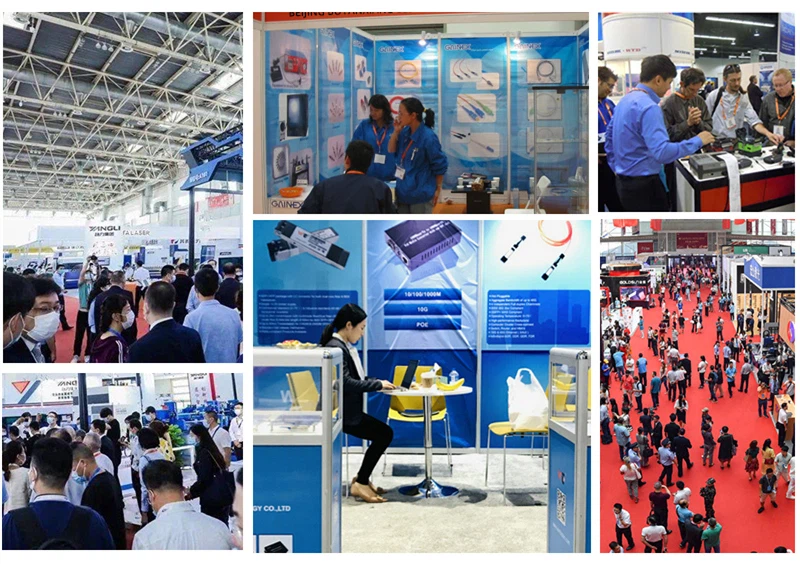
Babaolu (Shenzhen) International Technology Co., Ltd. founded in September 24, 2009 in Haidian District, Beijing, is a franchise fiber network products enterprise, products are optical fiber tools and accessories (optical power meter, red light pen, fiber jumper, tail fiber, optical power red light integrated machine cold connector, transceiver, Optical time domain reflectometer (OTDR), optical fiber found disabled apparatus, network tester, fast connection, cold pick up tools, etc.) product development and sales business.

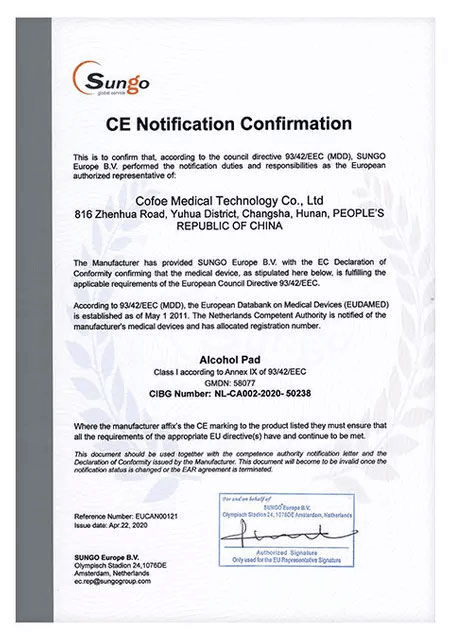
Certifications

FAQ
As one of the most professional 10/100/1000m fiber media converter manufacturers and suppliers in China, we're featured by quality products and good service. Please rest assured to buy 10/100/1000m fiber media converter at competitive price from our factory.
outdoor jumper, lc sc jumper, Fiber Media Converter