




Why Choose Us
Quality Control
We have built a professional quality control team to accurately inspect every raw material and every production process.
24H Online Service
We try and respond to all concerns within 24 hours and our teams are always at your disposal in case of any emergencies.
Professional Team
Our professional team collaborates and communicates effectively with each other, and is dedicated to delivering high quality results. We are capable of handling complex challenges and projects that require our specialized expertise and experience.
Advanced Equipment
A machine, tool or instrument designed with advanced technology and functionality to perform highly specific tasks with greater precision, efficiency and reliability.
What is Crystal Head Tester
Crystal Head Tester refers to a type of tester used to test the performance of crystal oscillators. Crystal oscillators are electronic devices that generate accurate and stable frequencies using piezoelectric crystals. These frequencies are widely used in various electronic devices, such as computers, mobile phones, radios, etc.
Advantages of Crystal Head Tester
High precision: The crystal head tester can measure the electrical parameters of electronic components with high precision, such as resistance, capacitance, inductance, voltage, current, power, frequency, impedance, etc. The accuracy of its measurement results can meet the requirements of high-precision applications.
High stability: The crystal head tester uses high-quality components and advanced circuit design, ensuring high stability and reliability during the measurement process. It can ensure the accuracy and repeatability of the measurement results.
Wide measurement range: The crystal head tester can measure a wide range of electronic components, including resistors, capacitors, diodes, transistors, integrated circuits, transformers, inductors, sensors, etc. It can adapt to a wide range of measurement requirements in the electronics industry.
Fast measurement speed: The crystal head tester has a fast measurement speed, which can measure multiple parameters at the same time. This can improve production efficiency and reduce testing time and cost.
Easy to operate: The crystal head tester is usually equipped with an intuitive user interface and easy-to-operate buttons and keys, which allows users to easily complete the measurement and adjustment operations. It also provides a variety of measurement modes and functions to meet different measurement requirements.
Common Types of Crystal Head Tester

Analog crystal head tester
This type of tester uses analog circuits to generate test signals, which can be used to test analog telephone lines. It has the advantages of simple operation and low cost, but its accuracy and stability are relatively low.

Handheld crystal head tester
This type of tester is small in size and easy to carry, which is suitable for field testing. It can be used to quickly detect the communication quality of telephone lines.

Digital crystal head tester
This type of tester uses digital circuits to generate test signals, which can be used to test digital telephone lines. Compared with analog testers, digital testers have higher accuracy and stability, but their cost is also higher.
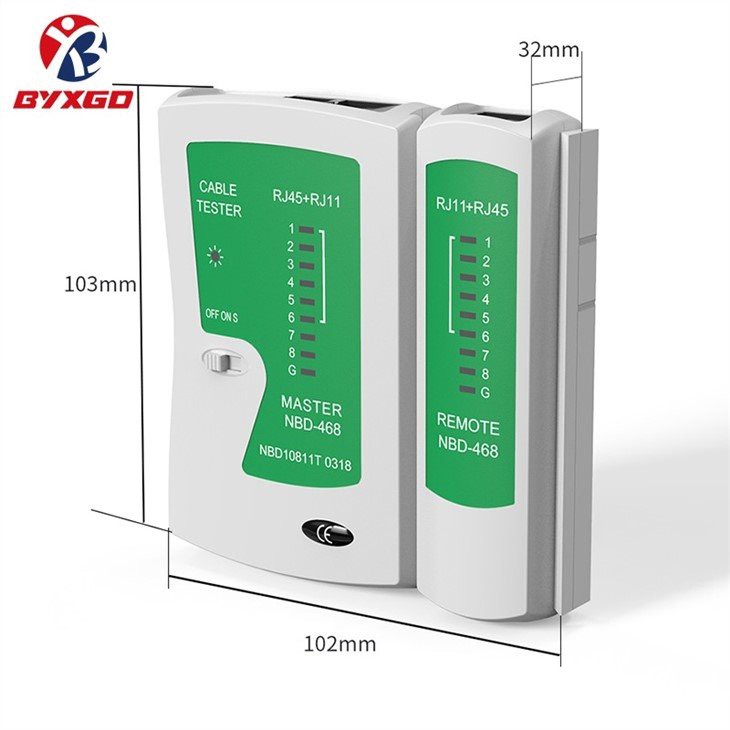
Multi-function crystal head tester
This type of tester has multiple functions, which can not only test the communication quality of the telephone line, but also test other parameters such as the impedance of the telephone line. It is suitable for more complex testing scenarios.
Operation Details of Crystal Head Tester
Preparation before operation: Check whether the crystal head tester is intact, whether the rubber pad is elastic, and whether there is any damage or wear. If there is any problem, replace it in time. At the same time, prepare the relevant tools and materials needed for the operation, such as cleaning cloth, lubricating oil, etc.
Selection of test points: According to the requirements of the pipeline system, select the appropriate test points for testing, generally including pipeline joints, valves, flanges, etc. Ensure that the test points are clean and dry, and free from oil, dust and other impurities.
Operation steps: First, clean the test point with a cleaning cloth to remove impurities and ensure good contact between the crystal head tester and the test point. Then, apply a certain amount of lubricating oil on the contact surface between the crystal head tester and the test point to reduce friction and wear. Next, place the crystal head tester on the test point, rotate it slightly to make it tightly connected to the test point, and observe whether there is leakage or looseness. If there are no problems, record the test results. If there is leakage or looseness, appropriate measures should be taken to deal with it.
Precautions: During the operation of the crystal head tester, pay attention to safety, avoid using excessive force or improper operation, so as not to damage the tester or cause personal injury. In addition, regular maintenance and inspection of the tester are required to ensure its normal use and accuracy.
Working Principle of Crystal Head Tester
Basic Components: The crystal head tester typically consists of a pair of probes (or leads) and a visual or audible indicator. The probes are used to touch the two ends of the wire or component under test, while the indicator provides feedback about the conductivity status.
Continuity Detection: When the probes are connected to the two ends of a conductive wire or component, the tester measures the resistance between the two points. If the resistance is low enough (indicating a good connection), the tester's indicator will light up or emit a sound, depending on the model. This means that there is a complete circuit path between the probes, and the wire or component is conducting electricity.
Voltage Source: Internally, the tester typically has a low-voltage source that generates a small amount of current when the probes are connected. This current flows through the wire or component, and the tester measures the resistance encountered.
Non-Conductive Detection: If the measured resistance is too high (indicating no connection or a broken wire), the tester's indicator light will not activate. This informs the user that there is a problem with the wire or component, such as a break or poor connection.
Applications: The crystal head tester is useful for quickly identifying issues such as broken wires, loose connections, and bad soldering joints. It is also commonly used in the installation and maintenance of telephones, networks, and other wired systems to ensure that cables are properly connected.
Maintenance Tips for Crystal Head Tester

Regular Cleaning:
● Wipe the tester's case with a soft, damp cloth to remove dust and dirt.
● Avoid using chemical cleaners or solvents that may cause damage to the tester's casing or internal circuitry.
Correct use:
● Use the tester correctly according to the instructions and avoid misoperation or excessive force.
● Use the correct network cable type and gauge for testing.
● Do not use the tester in high temperature or humid environments.
Storage and Maintenance:
● The tester should be stored in a dry, dust-free environment away from direct sunlight or moisture.
● Place the tester on a soft mat to avoid pressure damage to the tester.
Battery Maintenance (if applicable):
● If the tester uses batteries, replace the batteries regularly to avoid battery leakage and damage to the tester.
● When the tester is not used for a long period of time, it is best to remove the battery to avoid excessive battery discharge.
Software Update (if applicable):
● If the tester comes with accompanying software, check for software updates regularly and follow the instructions for updates.
Regular inspection:
● Regularly check the functionality and performance of the tester to ensure it is working properly.
● If any fault or abnormality is found with the tester, stop using it immediately and contact a professional for maintenance.
Handle with caution:
● When carrying or transporting the tester, place it in a suitable box or protective bag to protect it from shock and vibration.

What you should know when use Crystal Head Tester?
When using the tester, always ensure that the power is turned off and that neither the tester nor the test lines are connected to any active power or network devices. During testing, prevent the tester from coming into contact with water or other liquids to avoid damage to the equipment.
Make sure the tester is correctly connected to the network cable to be tested. Usually, the tester has two ports, one for connecting one end of the network cable and the other for connecting the other end of the network cable. Make sure the network cable is plugged into the correct port and is firmly plugged in.
Before the test, understand the type and specifications of the network cable, such as whether it is a crossover cable or a straight-through cable. Different types of network cables have different connections to devices. Also make sure the tester's battery or power source is charged and in good working order.
The tester usually displays different indicators or numbers to indicate the test results. It is important to know how to interpret these results. For example, some lights may indicate an open circuit, a short circuit, or a correct connection status of a line. Be sure to familiarize yourself with the tester's instructions or user manual to correctly interpret test results.
After using the tester, keep it properly and perform regular maintenance. Avoid exposing the tester to harsh environments such as moisture, high temperature, or high humidity. Clean and inspect the tester regularly to ensure it is in good working order.
What are Features of Crystal Head Tester?
High-precision measurement: Crystal oscillators usually require high-precision test equipment to accurately measure their frequency, phase, impedance and other parameters. Crystal Head Tester usually has high-precision measurement capabilities to ensure the accuracy of test results.
Multiple test modes: In order to meet the testing needs of different crystal components, Crystal Head Tester usually provides a variety of test modes, such as continuous testing, step testing, scanning testing, etc.
Automation and intelligence: Modern Crystal Head Testers usually have the characteristics of automation and intelligence, which can automatically complete the testing process, reduce manual intervention, and improve testing efficiency. At the same time, they also have data analysis functions, which can automatically analyze and process test results and provide detailed test reports.
Wide range testing capability: Crystal Head Tester is usually able to test crystal oscillators of different specifications and types, including different frequencies, packaging forms, operating voltages, etc. This makes them adaptable to a variety of application scenarios and testing needs.
Stability and Reliability: Since crystal oscillators play an important role in electronic equipment, the equipment used to test them needs to have a high degree of stability and reliability. Crystal Head Tester is generally manufactured using high-quality materials and workmanship to ensure the stability and reliability of the device.
What Are the Main Components of a Crystal Head Tester?
Crystal head interface
This is the main part of the tester, used to connect to the crystal head on the communication line to be tested. This interface needs to be compatible with a variety of different types of crystal heads and be able to accurately measure the parameters of the line.
Test circuit
The test circuit is the core part of the tester. It is responsible for performing various tests, such as the measurement of line impedance, line attenuation, noise and other parameters. The design of the test circuit needs to ensure the accuracy and stability of the test.
Display and control unit
This unit is used to display test results, as well as control and operate the tester. The display and control unit may include an LCD screen to display test results and various operating information, as well as buttons or knobs to control various functions of the tester.
Power supply and battery
For portable crystal head testers, power supply and battery are indispensable components. They need to provide enough power to drive the various functions of the tester, and they need to be able to ensure that the power does not run out during continuous use.
What Are the Functions of a Crystal Head Tester?
The main function of the Crystal Head Tester is to test the connection status and performance of network cables (such as RJ45 Ethernet cables). It is used to verify whether the cable has connected pins in the correct order (such as T568A or T568B standard) and to detect whether there are open circuits, short circuits, misconnections, reverse connections, or cross-connections in the cable. In addition, some advanced crystal head testers can also measure parameters such as cable length and attenuation to evaluate the quality and performance of the cable.
When performing network installation, maintenance and troubleshooting, using a crystal head tester can greatly improve work efficiency and accuracy. By using a tester, connection problems can be quickly found and repaired, ensuring the normal operation of network equipment and the stability of data transmission.
It should be noted that although the crystal plug tester can detect the physical connection status of the cable, it cannot detect the configuration or software problems of the network device. Therefore, when using the crystal head tester, it is also necessary to combine other tools and methods for comprehensive analysis and troubleshooting.
Factors to Consider When Selecting Crystal Head Tester


Accuracy: The tester should have high accuracy to ensure reliable test results. Accuracy is crucial for ensuring the quality of the crystals being tested.
Range: The tester should have a wide range of testing capabilities to accommodate different types and sizes of crystals. This will allow you to test a variety of crystals without having to purchase multiple testers.
Durability: The tester should be durable and able to withstand repeated use. Crystal head testers are often used in manufacturing or research settings, where they may be subject to heavy use. A durable tester will last longer and provide consistent results.
Ease of Use: The tester should be easy to use, with clear instructions and an intuitive interface. This will ensure that operators can quickly and accurately perform tests without extensive training.
Cost: The cost of the tester should be within your budget while considering the value it provides. High-quality testers may have a higher upfront cost, but they may offer better accuracy, durability, and features that justify the investment.
Technical Support: Consider the availability of technical support from the manufacturer or supplier. This can be crucial if you encounter any problems with the tester or need assistance with operation.
Compatibility: Ensure that the tester is compatible with the type of crystals you need to test. Different types of crystals may require different testing methods or equipment.
What Is the Manufacturing Process of Crystal Head Tester?
Design and Engineering: The initial stage involves creating the design and specifications for the crystal head tester. Engineers must take into account factors such as precision requirements, measurement range, target components, and ease of use.
Component Selection: High-quality components are essential for ensuring the tester's performance. Components such as resistors, capacitors, integrated circuits, and sensors are carefully chosen based on their specifications and reliability.
PCB Design and Fabrication: The printed circuit board (PCB) is the foundation of the tester. It involves laying out the components, traces, and connections on the board to ensure proper functionality. The PCB is then fabricated using etching, drilling, and other processes.
Component Assembly: Once the PCB is ready, the selected components are soldered or otherwise attached to the board. This step requires precision and attention to detail to ensure that all components are correctly placed and connected.
Testing and Calibration: After assembly, the tester undergoes rigorous testing and calibration procedures. This ensures that it meets the specified precision and measurement range requirements. Calibration may involve adjusting internal components or software to ensure accuracy.
Enclosure and Packaging: The tester is then enclosed in a protective case or housing to protect it from external elements and ensure user safety. Packaging is also designed to protect the tester during transportation and storage.
Quality Control: Quality control checks are performed throughout the manufacturing process to ensure consistency and reliability. This may include visual inspections, functional testing, and other quality assurance measures.
Final Inspection and Packaging: Once the tester passes all quality control checks, it undergoes a final inspection to ensure it meets all specified requirements. It is then packaged for sale or distribution.
What Are the Storage Requirements for Crystal Head Tester?
Temperature and Humidity: Ensure that the tester is stored in a controlled environment with temperatures ranging between 0°C and 40°C (32°F and 104°F) and relative humidity of 20% to 80% non-condensing. Avoid storing the tester in extremely hot or cold environments, as extreme temperatures can damage electronic components.
Dust and Dirt: Keep the tester clean and free from dust and dirt. Dust can accumulate on the tester's circuit boards and connectors, leading to corrosion and electrical issues. Use a clean, dry cloth to wipe the exterior of the tester periodically.
Moisture: Avoid storing the tester in damp or wet environments. Moisture can cause corrosion and electrical shorts, which can damage the tester permanently. If the tester is exposed to moisture, allow it to dry completely before using.
Shock and Vibration: Protect the tester from excessive shock and vibration. Store it in a secure location where it will not be subjected to impact or vibration. If the tester is moved, handle it gently to avoid internal damage.
Packaging: If the tester is not in use for an extended period, consider storing it in its original packaging or a suitable protective case. This will help protect the tester from dust, moisture, and other environmental factors.
Battery Maintenance: If the tester uses rechargeable batteries, follow the manufacturer's recommendations for charging and discharging the batteries. If the tester is stored for a long period without use, it may be advisable to remove the batteries to prevent damage.
Periodic Inspection: Periodically inspect the tester to ensure it is in good working condition. Check for any damage, corrosion, or loose connections. If any issues are found, refer to the manufacturer's manual for troubleshooting and repair instructions.
How to Control the Quality of Crystal Head Tester During the Manufacturing Process?
Raw Material Quality: Start by ensuring that you source your raw materials from reliable suppliers. The quality of the raw materials, such as the crystal material and other components, directly affects the final product's quality. Perform regular checks on the incoming materials to ensure they meet the specified standards.
Manufacturing Processes: Develop and follow standardized manufacturing processes that are designed to produce consistent and high-quality crystal head testers. This includes precise machining, assembly, and testing procedures. Use high-precision equipment and tools to minimize variations and ensure accurate dimensions and tolerances.
Quality Control Checks: Implement rigorous quality control checks throughout the manufacturing process. This includes regular inspections, measurements, and testing at various stages to identify and correct any potential issues early on. Use appropriate testing equipment and methods to assess the quality of the crystal head tester, such as checking for leaks, measuring dimensions, and performing functional tests.
Operator Training: Ensure that your operators are trained and skilled to perform the manufacturing tasks correctly. Provide regular training and refresher courses to ensure that they are up-to-date with the latest manufacturing techniques and quality standards. Encourage operators to report any issues or concerns they encounter during the manufacturing process.
Quality Assurance Program: Implement a quality assurance program that covers all aspects of the manufacturing process. This program should include regular audits, inspections, and testing to ensure that the manufacturing processes are being followed correctly and the final product meets the required standards.
Feedback and Improvement: Encourage feedback from customers and users to identify any issues or suggestions for improvement. Use this feedback to continuously improve the manufacturing process and product quality. Implement corrective measures and conduct failure analyses to prevent recurring issues.
How to Evaluate the Performance of Crystal Head Tester?
Accuracy: The tester should provide accurate results when checking for conductivity. Accuracy is critical in determining whether a connection is good or bad, avoiding false positives or false negatives. Compare the tester's readings with known standards or other testing equipment to assess its accuracy.
Reliability: A reliable tester will consistently produce accurate results under different conditions. Evaluate the tester's repeatability by performing multiple tests on the same connection to check for variations in the readings. Additionally, assess its durability and stability over time.
Speed: Speed is important, especially when testing a large number of connections. Compare the tester's response time with other models to determine how quickly it can provide results. Faster testers can help improve efficiency during testing.
Ease of Use: The tester should be easy to operate, with clear instructions and intuitive controls. Evaluate the tester's user interface, including the probes' design, indicator lights or sounds, and any additional features that enhance usability.
Range and Resolution: Consider the tester's measurement range and resolution, which determine the types of connections it can detect. A tester with a wide range and high resolution can detect smaller changes in resistance, providing more detailed information about the connection quality.
Safety: Safety is always a priority when dealing with electrical equipment. Ensure that the tester meets safety standards and has features such as overvoltage protection to prevent damage or injury.
Technical Support and Warranty: Evaluate the manufacturer's technical support and warranty coverage for the tester. This provides peace of mind in case of any issues or repairs, ensuring prompt assistance and parts availability.
How to Test the Durability of Crystal Head Tester?
Drop Test:
● Carefully drop the tester onto a soft surface from a height of about 1 meter (3 feet).
● Repeat the drop from different angles and sides to simulate real-world conditions.
● Inspect the tester for any visible damage, such as cracks, dents, or scratches.
● Ensure that the tester functions properly after the drop test.
Bending Test:
● Gently flex the cables and wires connected to the tester to check for any weaknesses or brittle points.
● Apply gradually increasing force to identify any points of failure.
● Repeat the bending test with different cables and wires if applicable.
Pressure Test:
● Apply pressure on the tester's body and buttons using your fingertips.
● Check for any creaking sounds, uneven pressure points, or flexing that suggests structural weakness.
● Ensure that the tester's buttons and functionalities work normally.
Vibration Test:
● Place the tester on a vibration tester or use a handheld vibrator to subject it to vibrations.
● This test simulates the effects of transportation and daily handling.
● Check for any malfunctions or loosened components after the vibration test.
Environmental Test:
● Expose the tester to extreme temperatures, high humidity, and dust conditions.
● This test simulates the conditions the tester might encounter in real-world environments.
● After the exposure, inspect the tester for any physical damage or functional issues.
Longevity Test:
● Use the tester continuously for an extended period, such as several hours or days.
● Monitor the tester for any signs of overheating, battery drain, or performance degradation.
● Ensure that the tester maintains its accuracy and reliability over time.
Compliance Testing:
● Check if the tester complies with any relevant industry standards or regulations.
● This might involve performing specific tests according to the standards specified.
What Are the Special Requirements for Packaging Materials for Crystal Head Tester?
Protective performance
Packaging materials must have excellent protective properties and be able to effectively resist external physical impact, vibration and extrusion to ensure that the crystal head tester will not be damaged during transportation and storage.
Electrostatic Protection
Due to the characteristics of electronic equipment, crystal head testers are very sensitive to static electricity. Therefore, packaging materials should have anti-static functions to prevent static electricity from causing damage to the equipment.
Ease of use
The packaging material should be designed to be easy to open and close, making it convenient for users to take out and put back the crystal head tester. At the same time, the size and weight of the packaging should also be moderate to facilitate portability and transportation.
Environmental adaptability
Packaging materials should have good moisture-proof, dust-proof, anti-corrosion and other properties to adapt to different transportation and storage environments.
Recyclability
In order to respond to environmental protection requirements, packaging materials should be recyclable and degradable as much as possible to reduce the impact on the environment.
Logo and instructions
The product name, specifications, production date, shelf life and other information should be clearly marked on the package, and necessary operating instructions and precautions should be provided.
How to Prevent Mold from Crystal Head Tester?
Proper Storage Environment: Store the crystal head tester in a clean, dry, and well-ventilated area. Avoid storing it in damp or humid environments, as this promotes mold growth. If possible, use a dehumidifier to maintain low humidity levels.
Cleanliness: Regularly clean the tester to remove any dust, dirt, or organic matter that may provide a breeding ground for mold spores. Use a soft cloth or a microfiber cloth to gently wipe down the surface. Avoid using harsh chemicals or solvents that may damage the finish or electronics.
Packaging and Protection: When not in use, package the crystal head tester in a protective case or bag to protect it from dust and moisture. Ensure that the packaging is breathable to avoid condensation and mold growth.
Regular Inspection: Periodically inspect the tester for any signs of mold growth. If mold is found, immediately clean the affected areas using a mold-resistant cleaner or a mild detergent solution. Take care not to damage any delicate components during cleaning.
Maintenance and Repair: Regularly maintain the tester according to the manufacturer's recommendations. If any damage or malfunction is noticed, have it repaired by a qualified technician promptly to prevent further deterioration that could lead to mold growth.
Avoid Prolonged Exposure to Moisture: Avoid exposing the crystal head tester to prolonged periods of moisture, such as rain or damp conditions. If the tester gets wet, dry it thoroughly before storing it.
Preparation: Make sure the connection between the test head and the host is normal. Insert the test head into the interface of the host and ensure that the plug and socket are tightly connected. Also, check the condition of the test head to make sure it is not damaged or dirty.
Connect the cable: Insert one end of the cable to be tested into the socket of the test head. Depending on the type of cable and interface, an adapter may be required to connect the cable to the test head. Make sure the cable plug and socket are fully inserted and the connection is secure.
Select test mode: Crystal head testers usually have multiple test modes, including connectivity test, line sequence test and length measurement. Select the appropriate test mode as needed. Before selecting a test mode, you need to understand the functions and usage of each mode.
Start testing: Press the test button on the host to start testing. During the test, the crystal head tester will send a signal to the cable, and then receive the signal returned by the cable and analyze it. Depending on the test mode, information such as cable connectivity, line sequence, and length can be obtained.
Result analysis: After the test is completed, the crystal head tester will display the test results. Based on the displayed results, you can determine whether the cable connectivity is normal, whether the line sequence is correct, and the cable length and other information. If the test results are abnormal, further investigation and repair are required.
Record and save: For important test results, it is recommended to record and save. You can take photos of the test results or use notepad and other tools to record them for future inquiry and reference.
Clean up: After the test is completed, unplug the cable and test head from the crystal head tester. At the same time, organize and tidy up the test head and main unit to ensure the safety and cleanliness of the equipment.
Our Factory
Babaolu (Shenzhen) International Technology Co., Ltd. founded in September 24, 2009 in Haidian District, Beijing, is a franchise fiber network products enterprise, products are optical fiber tools and accessories (optical power meter, red light pen, fiber jumper, tail fiber, optical power red light integrated machine cold connector, transceiver, Optical time domain reflectometer (OTDR), optical fiber found disabled apparatus, network tester, fast connection, cold pick up tools, etc.) product development and sales business, has a professional technical team, the omni-directional high-quality service strong financial strength, the company adhering to the customer first, sincere for this, the pursuit of excellence, to provide cost-effective first-class products and the best quality service and mutual benefit and win-win business philosophy, We have won the trust and long-term cooperation of our customers.

FAQ
Q: What is the Crystal Head Tester used for?
Q: How does the Crystal Head Tester work?
Q: What is impedance?
Q: What is inductance?
Q: Why is impedance important?
Q: How do I use the Crystal Head Tester?
Q: What are the advantages of using the Crystal Head Tester?
Q: Can I use the Crystal Head Tester on any speaker?
Q: How often should I test my speakers?
Q: What should I do if the tester displays an error message?
Q: Can the Crystal Head Tester damage my speakers?
Q: How accurate is the Crystal Head Tester?
Q: How long does the battery last in the Crystal Head Tester?
Q: What type of battery does the Crystal Head Tester use?
Q: Can I use the Crystal Head Tester to test other types of equipment?
Q: How do I care for my Crystal Head Tester?
Q: Can I buy replacement parts for the Crystal Head Tester?
Q: How much does the Crystal Head Tester cost?
Q: Is there a warranty on the Crystal Head Tester?
Q: Where can I learn more about the Crystal Head Tester?
Hot Tags: crystal head tester, China crystal head tester manufacturers, suppliers, factory, bfoc connector, multi core optical cable, sc to lc fiber optic patch cord multimode, Optical cable connection, Cable Types Singlemode and Multimode, fiber optic jumper single mode


